At a glance
Use the brand’s product, graphics and packaging to guide materials, display density and signage. Test the details together in the store.
Describe the room before reaching for the logo.
Physical brand identity is the way a brand becomes recognizable in a place: its materials, signs, proportions, displays and the details of being there. A useful design conversation begins by describing what that place should feel like when the product and the people arrive.
Ask the team for specific observations from the brand’s existing world. Perhaps the packaging uses generous space around a small amount of information. Perhaps the product depends on a close look at a seam, a texture or a finish. Perhaps the brand’s voice is direct and informal. Those details can guide the store more clearly than a list of adjectives such as premium, elevated and engaging.
For each observation, propose a physical consequence. Generous space could influence display density. A product detail may need a display customers can reach and lighting that shows the detail. An informal voice might shape signs, service points and the amount of explanation offered at the entrance.
Decide what deserves to be repeated.
Recognition needs some consistency. Choose a small number of elements that the store can repeat with purpose: a proportion, a material relationship, a graphic treatment or a way of grouping product. Give each element a job and decide where it belongs.
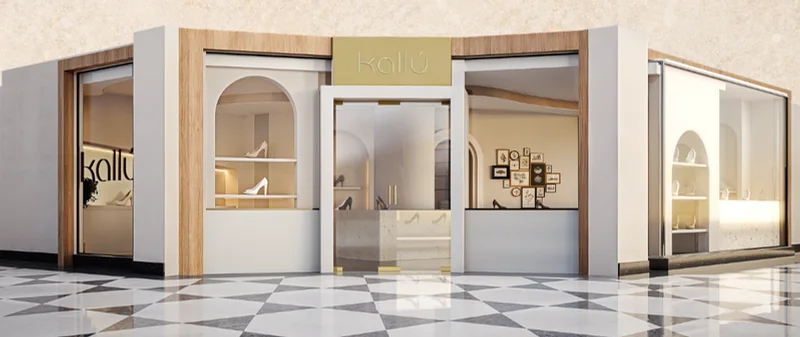
For Kallu Shoes, the proposed Las Vegas flagship starts with a reference from the product itself: the curve of a shoe sole. The design study carries that geometry into arches, portals and fixtures, with a restrained palette around the footwear. The concept also includes seating, service and stock storage. It is in development, with opening planned for Q4 2026.
It helps to show a rule alongside an example. A photograph of one beautiful shelf leaves the next team guessing. A simple explanation of spacing, material and product grouping gives them something they can apply when the collection changes.
Make the ordinary details part of the design.
Look at the objects that rarely appear in the first presentation: a price card, a size marker, a bag, a returns sign and the surface where a customer sets down a phone. They will share the room with the larger design gestures every day.
Prepare a small group of these items together. Check the type at the distance from which it will be read. Put the sign in its intended holder. Place the packaging on the counter. This exposes mismatched scales and practical problems that separate files can hide.
Invite the store team into that review. A sign may need to change regularly. A display may need an easy reset. The physical identity should come with a way to keep it looking intentional after the designers have left.
Allow the format to have its own needs.
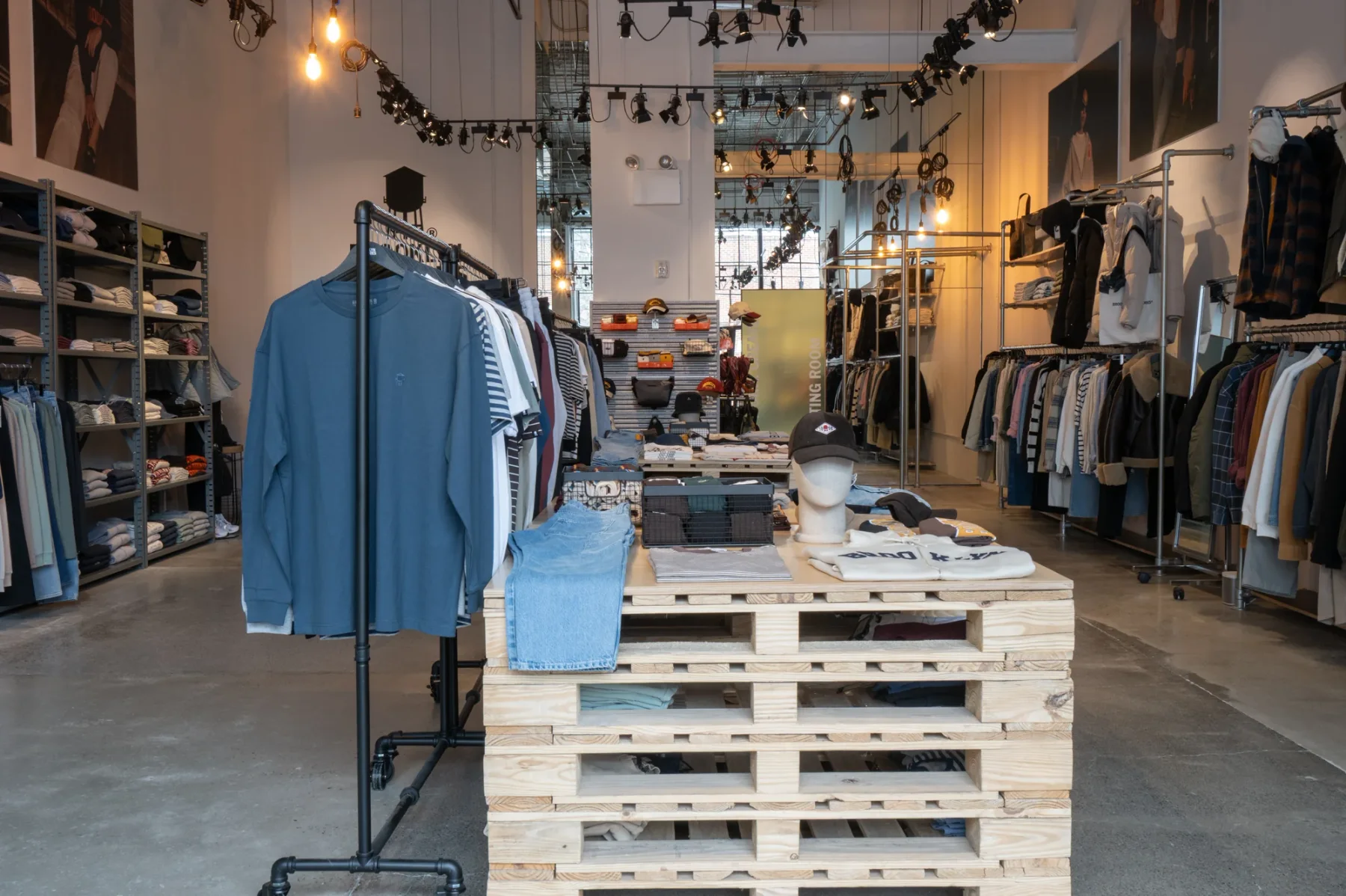
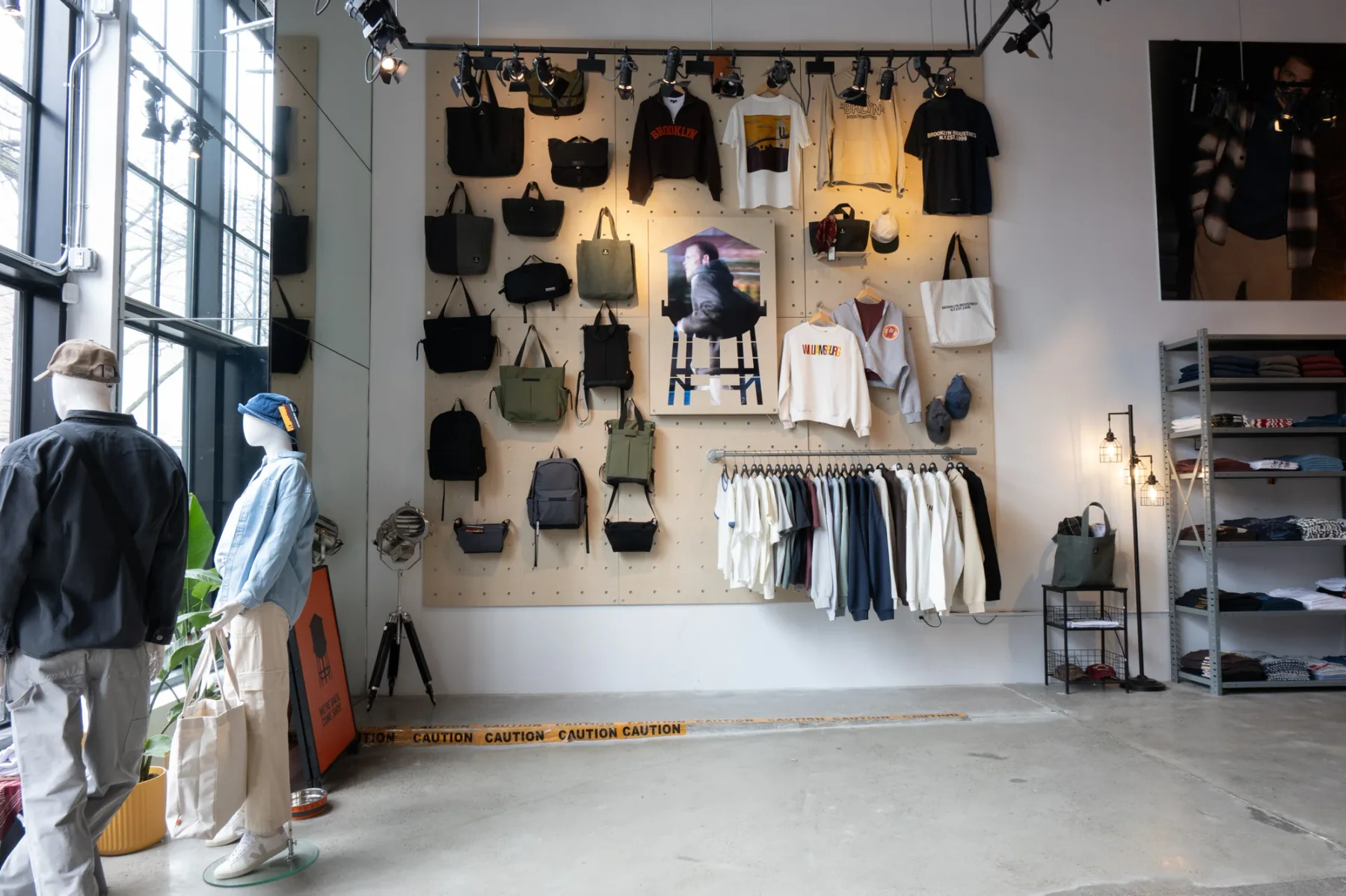
A flagship and an outlet can belong to the same brand while presenting merchandise differently. In the Brooklyn Industries work, the original wordmark and Franklin Narrow Bold typography provide a shared language. Store design and build carry the renewed identity into Williamsburg; the companion Jersey Gardens outlet gives past-season product its own setting. The two stores share the identity while presenting different assortments.
When planning multiple formats, decide which elements carry recognition and which can adapt. The answer may include consistent graphic standards alongside different fixture densities, display groupings or service arrangements. Write those choices down so that adaptation remains deliberate.
- Keep: the few elements that make the space recognizable.
- Adapt: details shaped by the assortment, customer visit or property.
- Maintain: the practical instructions and replacement items the store team needs.
Review it as a customer would encounter it.
Review the entrance sign, product displays, price cards, counter and packaging together. A type size that works on a wall may be unreadable on a shelf label. A finish that looks good in isolation may overpower the product beside it. These are the details to adjust before ordering the full set.
How we can help