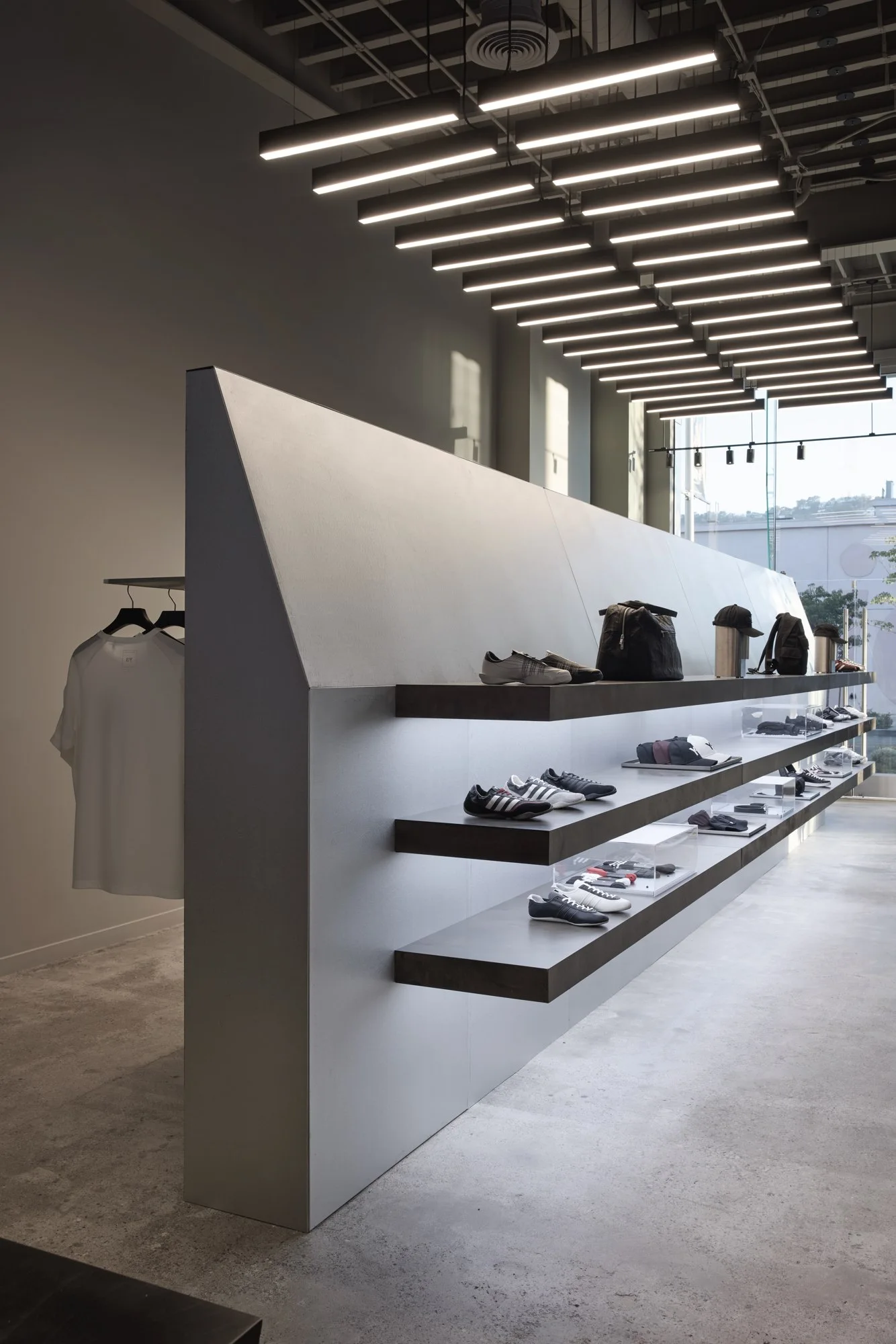
At a glance
Approve a material together with its intended use, care instructions and a workable plan for wear, repair and replacement.
Review the places that will be touched.
Material selection changes when the conversation moves from the presentation board to an ordinary trading day. A counter will meet bags, elbows, keys and cleaning cloths. A low fixture may be passed by stock cartons and customers carrying shopping bags. Those encounters deserve a place in the design review.
Mark the surfaces that customers and staff will touch most often. Include edges, handles and corners. Describe the likely use of each one, then ask the design team and fabricator to evaluate the proposed material and finish for that use.
This makes the brief more specific than asking for something durable. The requirement for a display panel is different from the requirement for a work surface where products are wrapped all day. Put the intended task next to the sample so the decision stays connected to the location.
Ask for the care instructions before approval.
Request the manufacturer’s current care guidance for the exact product and finish being proposed. Check whether the routine is practical for the people who will run the store. If a finish needs a particular cleaning method, put the instructions and supplies where staff can find them.
Wilsonart’s laminate care guidance, for example, identifies cleaning methods and warns against abrasive products that can damage its surfaces. That is guidance for the specified material. It should not be generalized into one cleaning rule for every finish in the store.
Bring the operating team into this discussion before orders are placed. Ask what can be cleaned during trading, what needs attention after closing and how the team will know which method belongs to which surface. A care manual helps only when it is easy to find and follow.
Look at a sample in its intended setting.
Place a sample beside the merchandise and other proposed finishes. Review it in the light intended for the space where possible. Look from standing and seated positions, from close range and across the room. Photograph the setup to record the relationship, while keeping the physical sample as the reference for approval.
Ask to see how an edge, junction or corner will be finished. A small flat sample may say little about the most visible part of the completed fixture. A larger mock-up can make those details easier to discuss with the fabricator.
Use the supplier’s care instructions when trying a cleaning method on a sample. If the finish is difficult to maintain with the time and equipment available to the store team, discuss a different specification before ordering.
Decide what happens when a part needs attention.
Ask whether a damaged panel can be replaced on its own, how a finish can be repaired and who would carry out the work. Request the relevant product references and details needed to order a replacement. Where the team proposes keeping spare parts, agree where they will live.
Consider a hypothetical display table with a replaceable top and a permanent frame. The top might be the part most exposed to daily handling. Check how the top is removed, how a replacement is matched and whether the table can stay in use while the part is being sourced.
Avoid assuming that any product will remain available indefinitely. Ask the supplier about availability when specifying it, and keep an accurate record of what was actually installed.
Hand over the information with the store.
Create a simple materials record organized by location. Include the installed product, finish, supplier, care instructions and the contact for a problem. Review the most relevant parts with the store team. The manager should be able to identify the finish and find the right supplier without calling the original designer.
Further reading & sources
How we can help